

Table of Contents
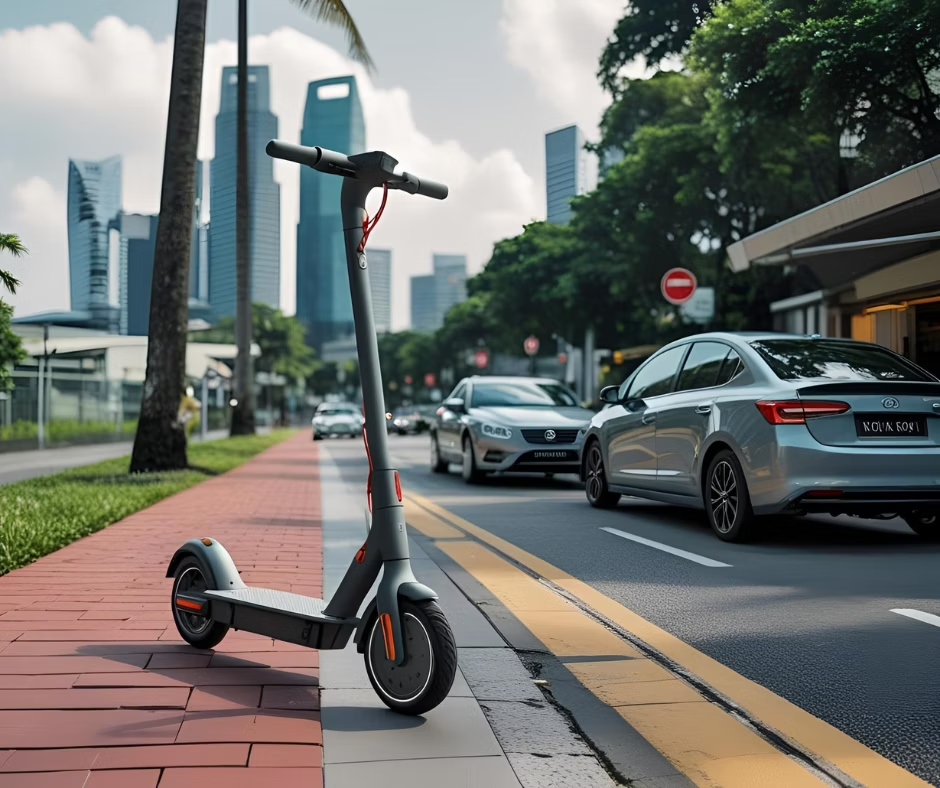
In the last decade, the electric scooter has gone from being a novelty gadget to a mainstream commuting choice for thousands of Singaporeans. For many, the decision to transition from car ownership to an electric scooter wasn’t just about saving money — it was about embracing a lifestyle that values sustainability, efficiency, and adaptability to the city’s fast-changing mobility landscape.
As Singapore’s streets evolve to accommodate more micro-mobility options, countless residents are discovering that life on two wheels can be just as convenient as life behind the wheel of a car. In this article, we explore the journeys of individuals from various walks of life who made the switch, examining the motivations, challenges, and unexpected joys that came with their electric scooter experiences.
Why People Are Making the Switch
The motivations behind moving from a car to an electric scooter are as diverse as Singapore’s population itself. For some, it’s the rising cost of car ownership — with Certificates of Entitlement (COEs) skyrocketing past six-figure sums — that prompted a reevaluation of daily transportation needs. Others cite the city’s increasingly efficient network of cycling and personal mobility lanes as a reason to adopt more compact, eco-friendly commuting methods.
Take Alex, a 35-year-old financial analyst from Tampines. He found himself spending more time in traffic than at home during peak hours. After calculating the combined costs of petrol, parking, road tax, and maintenance, he realised that switching to an electric scooter could save him nearly $12,000 a year. Beyond the financial benefits, he also found that his daily stress levels dropped significantly, as his commute became less about bumper-to-bumper frustration and more about enjoying the open pathways of the city.
Economic Advantages Beyond the Obvious
It’s easy to focus on the upfront savings when ditching a car for an electric scooter, but the long-term economic advantages are equally compelling. Without the burden of regular petrol refills, expensive tyre changes, or large-scale engine repairs, riders often find themselves with more disposable income. Many also discover indirect savings — such as no longer needing to pay for premium parking in the CBD or avoid hefty ERP charges during peak hours.
Rachel, a small business owner in Tiong Bahru, shared that her monthly transport costs plummeted by over 80% when she swapped her compact sedan for a folding electric scooter. She reinvested these savings into her café’s interior upgrade, something she’d been delaying for years. The transformation of her business became a living example of how micro-mobility choices can have ripple effects on other areas of life.
Environmental Consciousness and Lifestyle Shift
Another powerful motivator is environmental consciousness. Singapore has been making concerted efforts to reduce its carbon footprint, and residents are becoming increasingly aware of their role in this collective mission. Switching to an electric scooter means significantly lowering one’s contribution to greenhouse gas emissions, especially when compared to petrol-based vehicles.
Darren, a 28-year-old sustainability consultant, sold his car last year after calculating the carbon savings from his daily commute. His electric scooter requires minimal charging power, and he offsets that by using a solar-powered home charger. For him, the decision wasn’t just about getting from Point A to Point B — it was a statement about aligning personal choices with professional values.
Navigating the Transition Period
Of course, moving from the comfort and convenience of a car to an electric scooter comes with its own learning curve. There’s the adjustment to weather exposure, adapting to traffic flow in bike lanes, and the need for proper riding gear. The transition period is often where riders either fully embrace their new mode of transport or revert to old habits.
For Melissa, a 42-year-old teacher, the first few weeks were daunting. She missed having a dry seat on rainy days and struggled to balance her work materials while riding. However, she soon invested in waterproof pannier bags, a lightweight rain poncho, and a sturdy helmet, transforming her daily commute into a smoother experience. She credits a supportive online electric scooter community for helping her troubleshoot early challenges.
The Joy of Compact Mobility
One of the most commonly shared joys among switchers is the freedom of compact mobility. An electric scooter can be parked in a corner of your apartment, brought into an office, or folded up for public transport in seconds. This flexibility is a stark contrast to the space-hungry nature of cars.
Hafiz, a graphic designer from Woodlands, recalls how he used to spend 20 minutes every morning hunting for parking near his workplace. Now, his electric scooter folds neatly under his desk. The mental relief of not worrying about parking tickets or car scratches has been, in his words, “worth more than any financial savings.”
Health and Wellness Benefits
While cars encourage a sedentary lifestyle, riding an electric scooter introduces light physical activity and more outdoor exposure. Riders often find themselves walking short distances more frequently, which can contribute to better cardiovascular health and improved mood.
Lina, a 50-year-old retiree, initially bought an electric scooter for quick trips to the nearby market. Over time, she began using it for longer leisure rides with her husband. The combination of fresh air, sunshine, and gentle exercise improved her energy levels, and she now credits her electric scooter for helping her maintain an active retirement.
Stories from the Heartlands
The shift isn’t just happening in the city centre — heartland residents are also embracing electric scooters as a primary mode of transport. In neighbourhoods like Yishun, Jurong West, and Pasir Ris, it’s becoming increasingly common to see residents zipping to MRT stations, markets, and community centres on their scooters.
One memorable story comes from Mr. Tan, a semi-retired uncle in Yishun. He uses his electric scooter to deliver home-cooked meals to elderly neighbours who can’t travel easily. What started as a simple convenience for his own errands has turned into a small act of community service, proving that mobility choices can carry social value.
Integration with Public Transport
One of the reasons electric scooters are so well-suited to Singapore is their compatibility with the existing public transport system. Many riders adopt a “first and last mile” approach — using their scooter to connect from home to the nearest MRT station, and then from the station to their workplace.
Priya, a marketing executive, lives in Punggol and works in Raffles Place. Her daily commute now combines a 10-minute electric scooter ride to the MRT, a 25-minute train ride, and another quick scooter ride to the office. This hybrid approach has shaved 15 minutes off her old car commute while cutting her transport costs by 70%.
The Role of Technology in the Transition
Modern electric scooters come equipped with advanced features like regenerative braking, Bluetooth tracking, and app-based diagnostics. These technological upgrades not only enhance convenience but also help riders feel more secure in their choice to go car-free.
For example, Wei Jie, a tech enthusiast, was drawn to an electric scooter model that integrates with his smartwatch. He can lock and unlock it remotely, track battery health, and even set speed limits for different zones. This level of connectivity makes the scooter feel less like a downgrade from a car and more like a modern upgrade in urban mobility.
Challenges Still Faced
Despite the many advantages, electric scooter riders still face challenges such as limited speed limits, certain path restrictions, and occasional public misconceptions. While Singapore’s infrastructure is improving, there’s still room for more dedicated riding lanes and better integration with urban planning.
Several riders note that weather remains the biggest unpredictability. Sudden downpours can disrupt plans, which means electric scooter riders need to be more adaptable and plan ahead with rain gear or alternative routes.
Future of Personal Mobility in Singapore
The success stories of those who transitioned from cars to electric scooters point toward a broader shift in Singapore’s transportation culture. Government initiatives, community education, and continued infrastructure investments are likely to make personal mobility devices even more viable in the coming years.
Urban planners predict that as the city pushes towards a car-lite future, the electric scooter will play a crucial role in bridging the gap between walking and mass transit. This transition isn’t just about moving people — it’s about transforming how people interact with their city.
Conclusion: A City in Motion
The stories of Alex, Rachel, Darren, Melissa, Hafiz, Lina, Mr. Tan, Priya, and Wei Jie are just a snapshot of the broader change happening across Singapore. Moving from a car to an electric scooter is not merely a switch in transport mode — it’s a redefinition of lifestyle, priorities, and daily rhythm. Whether motivated by cost savings, environmental impact, health benefits, or sheer convenience, these individuals are proving that mobility in Singapore is as much about personal choice as it is about infrastructure.
As more Singaporeans follow in their footsteps, the city’s streets will continue to evolve, becoming spaces where two wheels, public transport, and walking all coexist in harmony. The electric scooter revolution is not just about getting from place to place — it’s about building a future where movement is smarter, greener, and more connected than ever before.

I am curious if electric scooters are really a better choice for the environment compared to cars. Do they provide significant benefits to reduce carbon footprints?
Yes, electric scooters provide significant environmental benefits. They help lower greenhouse gas emissions compared to petrol vehicles, especially when charged with renewable energy sources. By choosing an electric scooter, you contribute to the collective mission of reducing Singapore’s carbon footprint.
I totally agree with the benefits of electric scooters! They really do save money and help the environment at the same time. I’m excited to see more people making this switch in Singapore.
I wonder how switching to an electric scooter could really impact my daily life and expenses. What do you think about the long-term effects?
Switching to an electric scooter can lead to significant savings on transport costs in the long run, as many riders experience a reduction in expenses related to fuel, parking, and maintenance. Additionally, the lifestyle shift often brings reduced stress and increased physical activity, portraying a more balanced daily routine.
I love how you highlight the joy of compact mobility! It’s true, riding an electric scooter has made my daily trips so much easier and less stressful. Thanks for sharing these stories!
Wow, this article opened my eyes to the lifestyle changes possible with electric scooters. It’s not just about saving money but also enjoying a healthier lifestyle. Great insight!
This is such an inspiring read! I never thought switching to an electric scooter could change my whole lifestyle. It really makes me rethink my choice of transport!